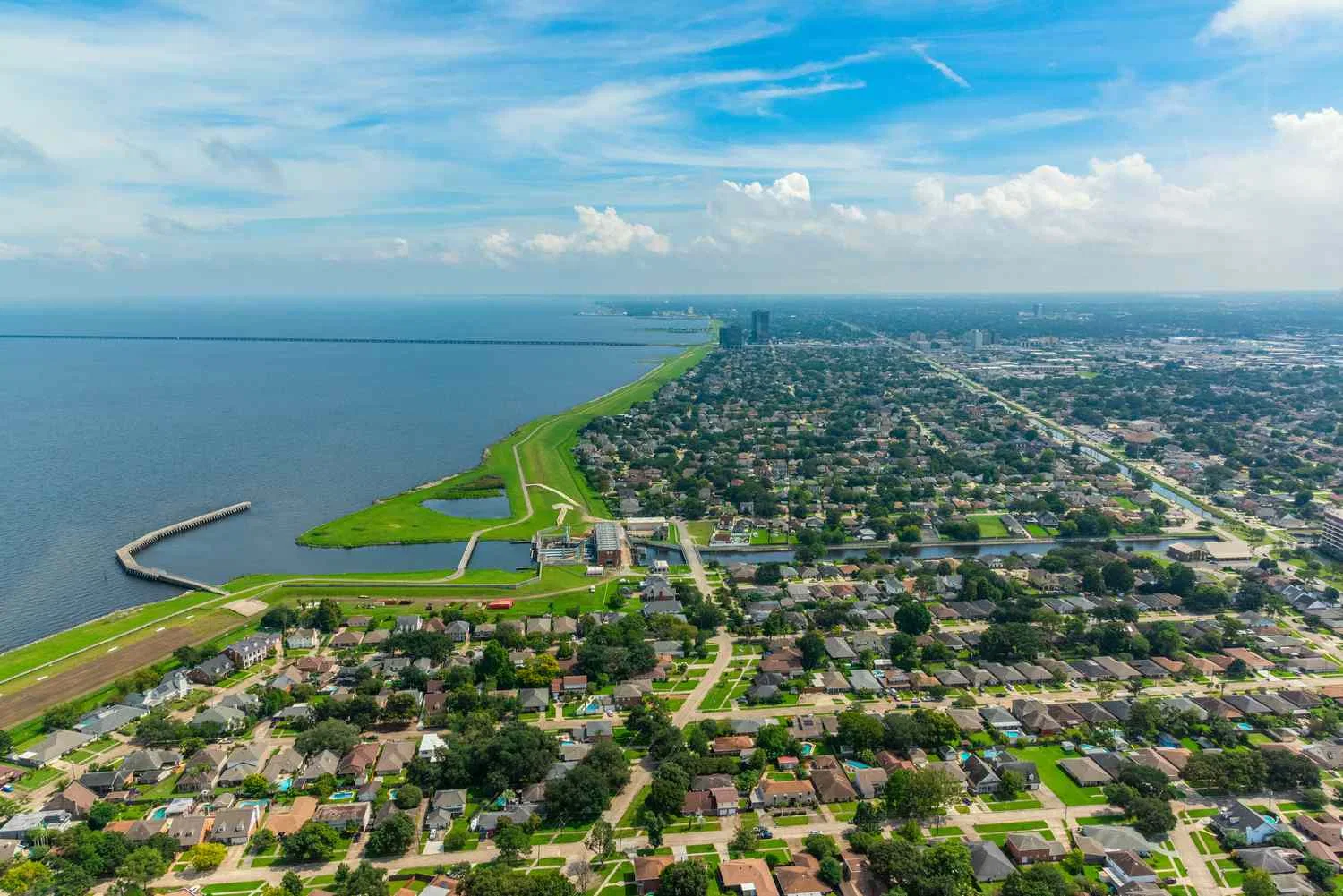
Lakeview is the New Orleans neighborhood that flooded worst when the 17th Street Canal floodwall gave way in 2005, and it is also the neighborhood that came back rebuilt to a higher standard than almost anywhere else in the city. Investors buying here are buying into that rebuild, and into a housing stock and commercial base that today looks meaningfully newer than the neighborhood's pre-storm reputation would suggest.
What 2005 Actually Changed Here
Nearly every commercial building on Harrison Avenue and every home within blocks of the canal took on water when the floodwall failed, and the neighborhood emptied out for years afterward. What rebuilt is newer construction sitting on higher foundations, built or renovated after the post-storm base flood elevation maps went into effect.
That means a Lakeview building's age on paper can be misleading. A structure with an original mid-century permit date may have been gutted to the studs and rebuilt with mechanical systems raised above grade. A buyer should ask for the actual renovation history and the original permit both, since the two together tell a fuller story than either alone.
The pace of the rebuild also varied block by block. Streets closest to the floodwall breach itself were among the last in the city to see meaningful reinvestment, while blocks toward Fleur de Lis or the Bucktown line rebuilt on a faster timeline, and that history still shows up today in a visible difference in building stock and property values within a few blocks of each other.
Harrison Avenue and the Commercial Corridor
Harrison Avenue carries most of the neighborhood-serving retail and restaurant space, small storefronts leasing to local operators rather than national chains. Canal Boulevard and West End Boulevard carry some professional office and medical space closer to the lakefront.
Rents here reflect the rebuilt housing stock and the household income that came with it, but vacancy on Harrison is thin. Space turns over fast when it comes open, and a buyer waiting on one specific listing may need a backup submarket in hand.
West End Boulevard, closer to the lakefront and the marina district, carries a different character than Harrison, with more standalone professional buildings and less continuous storefront frontage. A buyer should treat the two corridors as separate retail markets with separate vacancy and rent patterns, rather than assuming Lakeview commercial space performs uniformly across the neighborhood.
What Actually Trades in Lakeview
- small mixed-use buildings on Harrison Avenue
- professional and medical office near Canal Boulevard
- residential rental duplexes and small multifamily
- service retail serving the neighborhood directly
- DST allocations for investors who want lakefront exposure without direct management
Flood Insurance Isn't Optional Here
Every commercial property in Lakeview needs a current elevation certificate, and the premium on a building that hasn't been elevated to current standards can run high enough to change the deal. Get the actual quote in hand before closing, not an estimate from the listing broker.
Ask whether the elevation certificate reflects the post-storm base flood elevation or an older one. That single document changes the insurance math more than almost anything else in the file. A buyer should also confirm whether the certificate was issued for the building as originally rebuilt or after any subsequent renovation, since a later addition or expansion can sometimes fall outside what the original certificate actually covers.
Comparing Lakeview to the Rest of the Lakefront
Lakeview sits between Mid-City and the corridor running toward Metairie, and buyers often shortlist both alongside Lakeview for the same reason: rebuilt housing stock, stable neighborhood retail, and manageable scale for a private investor.
If the Lakeview deal slows down during the 45-day identification window, a Metairie or Mid-City alternate should already be on the list rather than added at the last minute. Lake Vista and Lakeshore, the neighborhoods immediately adjacent along the lakefront, share some of Lakeview's post-storm rebuild profile and are worth including in the same comparison set when an exchanger is building out a realistic identification list.
Common 1031 Exchange Questions
Does a Lakeview property need flood insurance even outside the highest-risk FEMA zone?
Most lenders will require it regardless of the specific zone designation, given the neighborhood's flood history. Budget for it in the underwriting from the start rather than treating it as a closing surprise.
How do I know if a building was actually rebuilt after the storm or just repaired?
Pull the permit history from the city. A full rebuild shows structural permits rather than cosmetic ones alone, and often shows a change in finished floor elevation.
Is Harrison Avenue retail a safe bet for a passive replacement property?
It can work, but vacancy is low enough that available listings are limited. Widen the search to Canal Boulevard or nearby Metairie corridors rather than waiting only on Harrison inventory.
What should I ask my qualified intermediary about a Lakeview closing?
Confirm early that title work accounts for any post-storm succession or insurance-settlement liens that sometimes attach to rebuilt properties, since those can slow a closing inside the 180-day window.
Should I compare Lakeview only to other New Orleans neighborhoods?
Not necessarily. Metairie across the parish line offers similar household income and retail demand without the same flood-rebuild history, and it's worth having on the same shortlist.
Does Lakeview's rebuild history affect boot calculation in a 1031 exchange?
Not directly, but any insurance settlement funds or repair credits tied to the property's post-storm history that get handled outside the standard purchase price at closing can be treated as boot. Review the full closing statement with the exchanger's CPA before signing.