New Orleans East is the largest stretch of land inside the city limits, and it's also the part of the city that took the worst combination of levee failure and storm surge during Katrina. Twenty years of federal levee investment changed the flood-protection math here, but the commercial market is still catching up to where it was before the storm. The Vietnamese-American community centered around Village de l'Est, one of the fastest neighborhoods in the city to rebuild after 2005, remains one of the more stable pockets of retail and residential demand in this part of the city.
What the Federal Levee System Actually Built
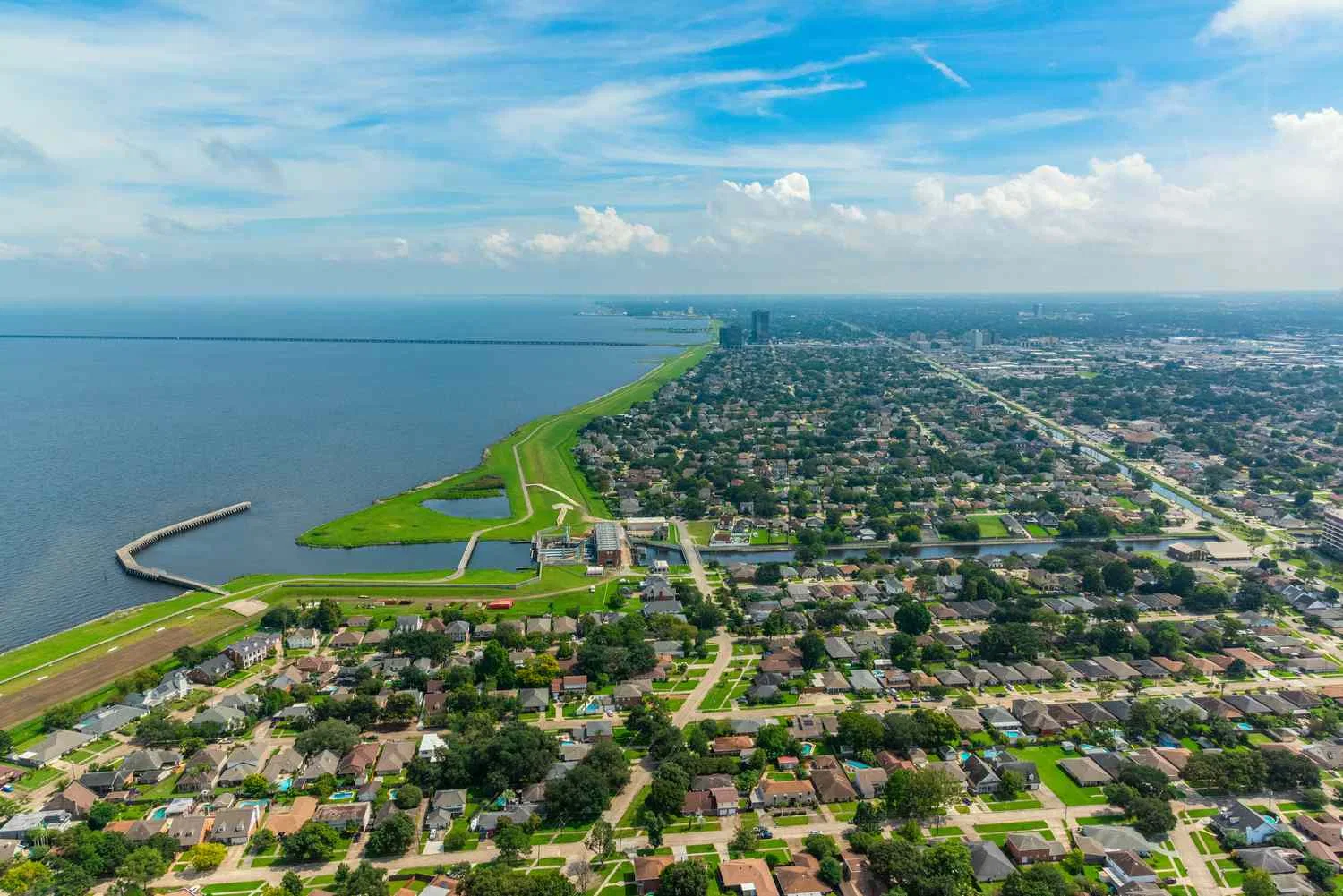
After Katrina, the Army Corps built out a surge barrier on Lake Borgne and closed off the Mississippi River-Gulf Outlet, the channel that had funneled storm surge straight into New Orleans East and the Industrial Canal. That work brought this part of the city to a federally certified level of hurricane protection.
That's a real change from the pre-storm system, but it doesn't mean flood insurance or elevation requirements go away. Lenders still price the risk, and a buyer should confirm current flood zone status rather than rely on older assumptions about the area. The area closer to the lakefront and Lake Forest still carries a different insurance conversation than blocks nearer the interstate corridors further inland, and a parcel-specific determination remains the only reliable way to confirm where a given property actually falls.
Big Parcels and What's Actually Redeveloping
New Orleans East has larger commercial parcels than almost anywhere else in the city, a legacy of how the area was developed decades before the storm. Some of that stock, the old big-box centers along Read Boulevard and Chef Menteur Highway in particular, never fully came back and still sits vacant or underused today.
That gap is exactly where value-add opportunity exists for an investor willing to take on redevelopment risk, but a buyer needs a realistic read on actual tenant demand before assuming a vacant shell will fill back up on its own. The former Six Flags site near I-10, closed since Katrina and never redeveloped, is the most visible example of that stalled recovery, and its continued vacancy is a useful reminder that scale and low price alone do not guarantee a redevelopment plan will pencil out.
What's Actually Available in New Orleans East
- industrial and warehouse space along Chef Menteur and Almonaster
- large-format retail parcels, several still underused since Katrina
- multifamily communities serving a rebuilding residential base
- land and redevelopment sites at lower per-acre cost than the rest of the city
- net-lease pads along I-10 frontage
Confirming Tenant Demand Before Trusting the Rent Roll
Population density in New Orleans East is still below where it was before 2005, and that matters directly for retail and multifamily underwriting. A rent roll built on pre-storm assumptions doesn't reflect today's actual household count in the trade area.
Pull current demographic data for the specific trade area, not city-wide numbers, and talk to an operator who's actually run a business out here recently rather than relying only on a broker's package.
Timing and Backups for an East Side Exchange
Because inventory here includes both distressed and genuinely stabilized property, due diligence timelines can run longer than expected, environmental review on older industrial parcels, title work on land that sat vacant for years, or financing that takes extra scrutiny because of the area's history.
An investor targeting New Orleans East inside a 1031 window should build in extra time for these steps and keep a Gentilly, Slidell, or Chalmette property ready as backup in case the East side deal needs more runway than the exchange period allows.
Village de l'Est and the Lake Forest area near it are worth naming specifically on an identification list rather than the broader New Orleans East label alone, since these pockets have a track record of steadier occupancy that a lender or appraiser will treat differently than a vacant Read Boulevard big-box parcel a few miles away.
Common 1031 Exchange Questions
Is New Orleans East actually protected from flooding now?
The federal levee system built after Katrina, including the Lake Borgne surge barrier and the closure of the Mississippi River-Gulf Outlet, brought the area to a certified protection level. That's real, but it doesn't eliminate flood insurance requirements or lender scrutiny.
Why are there still vacant big-box centers here two decades later?
Population and household income in the trade area haven't fully returned to pre-storm levels in every part of New Orleans East, and retailers underwrite to current demand, not historical demand.
Are large parcels here actually cheaper than comparable land elsewhere in the city?
Generally yes, on a per-acre basis, which is part of why value-add and redevelopment investors look here. That discount reflects real underwriting risk alongside the opportunity, and both sides of that equation deserve equal attention before committing exchange proceeds.
What kind of due diligence takes longer in New Orleans East?
Environmental review on older industrial sites and title work on long-vacant parcels both tend to run longer than a typical New Orleans transaction, so build extra time into the exchange schedule.
What's a reasonable backup market if a New Orleans East deal slows down?
Gentilly, Slidell, and Chalmette all share some of the same tenant and demographic profile and make reasonable alternates on an identification list, particularly for an investor already comfortable with a rebuilding, value-oriented submarket.