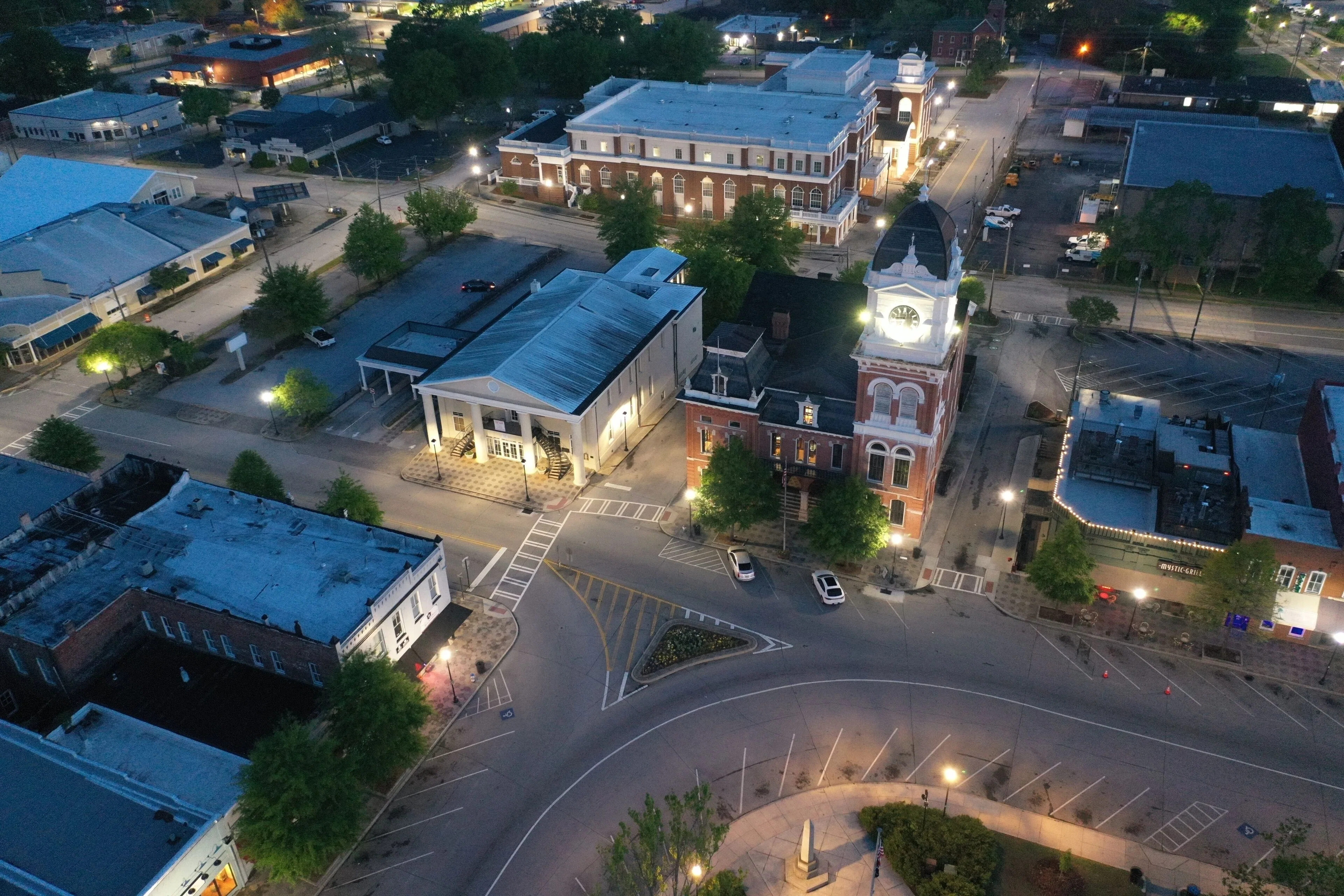
Mandeville sits on the north shore of Lake Pontchartrain, twenty-four miles across the Causeway from Metairie, and that bridge is the reason the town exists as a commercial market at all. Investors buying here are usually buying distance from the flood and insurance profile of the south shore, along with a genuinely different pace of life reflected in lower density zoning and more green space than a comparable Jefferson Parish submarket.
The Causeway Is the Whole Story
Every commute, every delivery truck, and every retail customer crossing into Mandeville from the south shore does it over one bridge, and that single point of access shapes how the town's commercial real estate behaves. Retail and office space clustered near the Causeway approach on Highway 190 sees the heaviest traffic and commands the strongest rents.
Space further into Old Mandeville or toward Covington trades on local household demand instead, which is steadier but smaller in scale. The Causeway itself carries some of the heaviest commuter volume of any bridge in the region, and its toll structure and occasional weather-related closures during dense fog are both worth factoring into how reliably a Causeway-dependent tenant's customers can actually reach the property on a given day.
Old Mandeville and the Lakefront Exception
Most of Mandeville sits well above the flood risk that defines the south shore, but the historic lakefront strip in Old Mandeville is the exception. Storm surge off the lake has reached that stretch during past hurricanes, and any commercial building right on the water needs the same flood diligence a buyer would run in New Orleans.
A block or two back from the lake, the risk profile changes considerably. An exchanger should never assume Mandeville means no flood exposure without checking the specific parcel, since the town's reputation as a safer alternative to the south shore applies unevenly depending on proximity to the water.
The Mandeville lakefront and the Trailhead Park area along the Tammany Trace draw a mix of walkers, cyclists, and local shoppers that supports a handful of restaurant and retail tenants directly, distinct from the highway-driven retail near the Causeway approach.
Property Types on the North Shore
- medical and professional office near the hospital corridor
- neighborhood and highway retail along 190
- small multifamily serving north shore households
- net-lease property near the Causeway approach
- DST allocations for a lower-management north shore position
Why Investors Trade Into Mandeville From the South Shore
A common pattern here is an investor selling a New Orleans or Jefferson Parish property and rolling the proceeds into Mandeville specifically to reduce insurance cost and flood exposure going forward. That's a legitimate replacement strategy.
It only works if the new property's rent roll actually supports the price paid. North shore cap rates run lower than south shore cap rates for exactly this reason, and an investor chasing safety can overpay if the numbers aren't stress-tested against local comparables first.
An exchanger making this move should also budget for the fact that St. Tammany Parish property tax rates and assessment practices differ from Orleans or Jefferson Parish, and a pro forma built by simply carrying over south shore operating expense assumptions can understate or overstate the actual carrying cost of a Mandeville property.
Timing a North Shore Closing
St. Tammany Parish's title process moves at its own pace, and a Mandeville closing inside the 180-day exchange period should account for that rather than assume it matches New Orleans timelines. A qualified intermediary experienced with north shore closings can flag title or survey issues early.
If Covington or Slidell properties are also on the identification list, keep them genuinely ready to close rather than treating them as a formality added purely to satisfy the three-property rule, since a backup that cannot actually close inside the exchange period provides no real protection.
Common 1031 Exchange Questions
Is Mandeville actually lower flood risk than New Orleans?
For most of the town, yes, since it sits on higher ground. The lakefront strip in Old Mandeville is the exception and should be underwritten with the same flood diligence as a south shore property.
Why do north shore cap rates run lower than south shore cap rates?
Investors pay a premium for the perceived stability and lower insurance cost of St. Tammany Parish. That premium is real, but it means the numbers need to be checked carefully rather than assumed.
Does Causeway traffic affect commercial value?
Indirectly. Retail and office space near the Causeway approach benefits from steady commuter traffic, while properties further from the bridge depend more on local household demand alone.
What medical office demand exists in Mandeville specifically?
The town serves as a bedroom community for the broader St. Tammany Parish hospital corridor, and professional and medical office space along Highway 190 leases to providers serving that population, with demand generally steadier than the retail sector because it depends less on discretionary spending.
Should I keep a south shore backup if I'm targeting Mandeville?
Yes. North shore inventory is thinner than the south shore, and a Covington or Slidell alternate, or a Metairie property, protects the exchange if the preferred Mandeville deal doesn't close on time.
Does the Causeway toll or bridge closures affect underwriting for a Mandeville property?
Occasional fog-related closures are rare but real, and a tenant whose customer base depends entirely on same-day south shore traffic should be evaluated with that variability in mind rather than assumed to have uninterrupted access year-round.