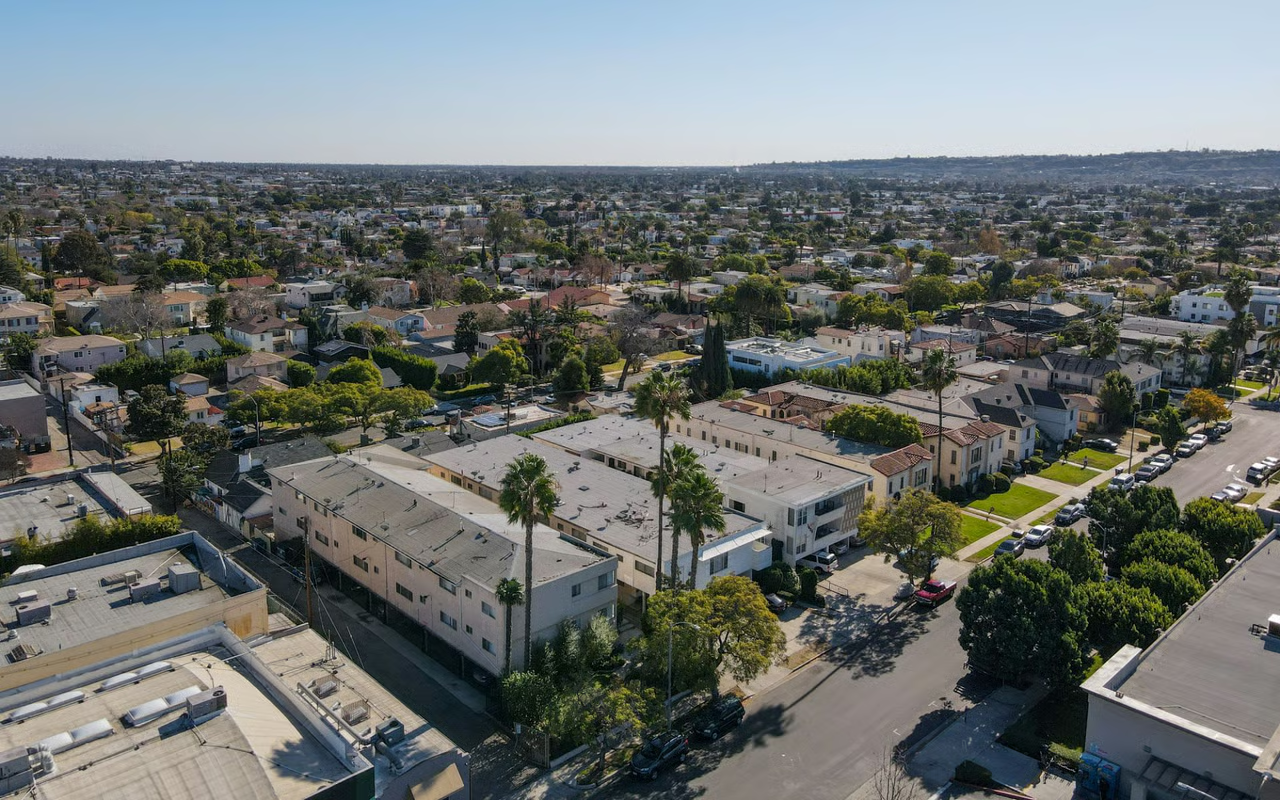
Self storage sits in an odd spot on the commercial real estate spectrum, part real estate, part small business. A facility's income comes from month-to-month rentals rather than long-term leases, its tenants come and go without much notice, and the physical product, rows of steel units behind a gate, looks almost nothing like an apartment building or an office park. In a city where flooding, hurricane evacuations, and downsizing moves generate steady demand for a place to stash furniture and boxes on short notice, storage has carved out a durable niche around New Orleans.
What Drives Demand Locally
New Orleans has an unusually mobile renter population, tourism and hospitality workers relocate often, and hurricane season sends a predictable wave of people into storage each year, whether they're evacuating with belongings or repairing a flooded home and need somewhere to put contents during the work. Facilities near dense apartment corridors in Mid-City, Uptown, and Metairie tend to lease up faster than those in areas with more single-family homeownership, since renters without a garage or attic are the core customer.
The Operational Side Buyers Underestimate
Unlike a net-leased retail box, a storage facility runs more like a small operating business. Someone has to manage move-ins and move-outs, chase past-due accounts, run periodic rate increases across hundreds of individual tenants, and handle the lien and auction process on abandoned units under Louisiana law. Facilities are commonly managed through a third-party operator or franchise platform rather than self-managed, and that management fee needs to be underwritten as a real expense, not treated as pure profit the way an inexperienced buyer sometimes does.
Revenue management software has become standard on professionally run facilities, adjusting street rates by unit type and occupancy in something closer to real time than a traditional annual rent review. A buyer evaluating a facility still priced off a flat, manually-set rate sheet should factor in what a switch to dynamic pricing could realistically add, without assuming the full theoretical upside will show up on day one.
Flood Elevation and Building Type Change the Math
Storage buildings in low-lying parts of Orleans, Jefferson, and St. Bernard Parish need to be evaluated for flood elevation the same way any other commercial building would be, since a facility built at grade in a flood-prone corridor faces higher insurance costs and a real risk of contents damage that drives customer complaints and turnover. Climate-controlled interior-unit facilities generally carry higher construction and insurance costs than drive-up exterior unit product, but they also command a rent premium in this humid climate, where mold and moisture damage to stored belongings is a genuine concern for tenants.
Self Storage as 1031 Replacement Property
A stabilized, professionally managed storage facility can qualify as 1031 exchange replacement property the same as any other investment real estate, and its diversified tenant base, hundreds of month-to-month renters rather than one or two commercial leases, appeals to investors who want less exposure to any single tenant's credit. Investors who want storage exposure without operating a facility directly sometimes consider a Delaware Statutory Trust holding a storage portfolio, an option that removes the day-to-day management burden but comes with illiquidity and is limited to accredited investors.
Diligence on a storage acquisition should include a review of unit-type mix, small drive-up units, large climate-controlled bays, vehicle and boat parking, since a facility overweighted in one unit size can face slower lease-up if local demand skews differently than the existing mix assumes.
Common 1031 Exchange Questions
Is self storage considered real estate or a business for 1031 purposes?
The real property itself, the land and buildings, can qualify as like-kind replacement property. The operating business activity, day-to-day management and rentals, is separate from the real estate and doesn't itself qualify.
Why does hurricane season affect storage demand in the New Orleans area?
Evacuations and home repairs after storms both drive short-term demand for storage space, giving well-located facilities a seasonal but fairly predictable demand pattern that some other asset types don't share.
Does flood zone location matter for a storage facility purchase?
Yes. A facility in a lower-lying flood zone faces higher insurance costs and a greater risk of contents damage claims, both of which affect operating expenses and tenant retention.
Is climate-controlled storage a better investment than drive-up storage?
It depends on the submarket. Climate-controlled units cost more to build and insure but rent at a premium in a humid climate where moisture damage is a real concern, while drive-up units cost less to operate and appeal to price-sensitive tenants.
Can a Delaware Statutory Trust hold self storage property?
Yes, some DST sponsors offer self storage portfolios as 1031-eligible replacement property. These are private placements limited to accredited investors and carry their own illiquidity and fee considerations.